14/03/2025
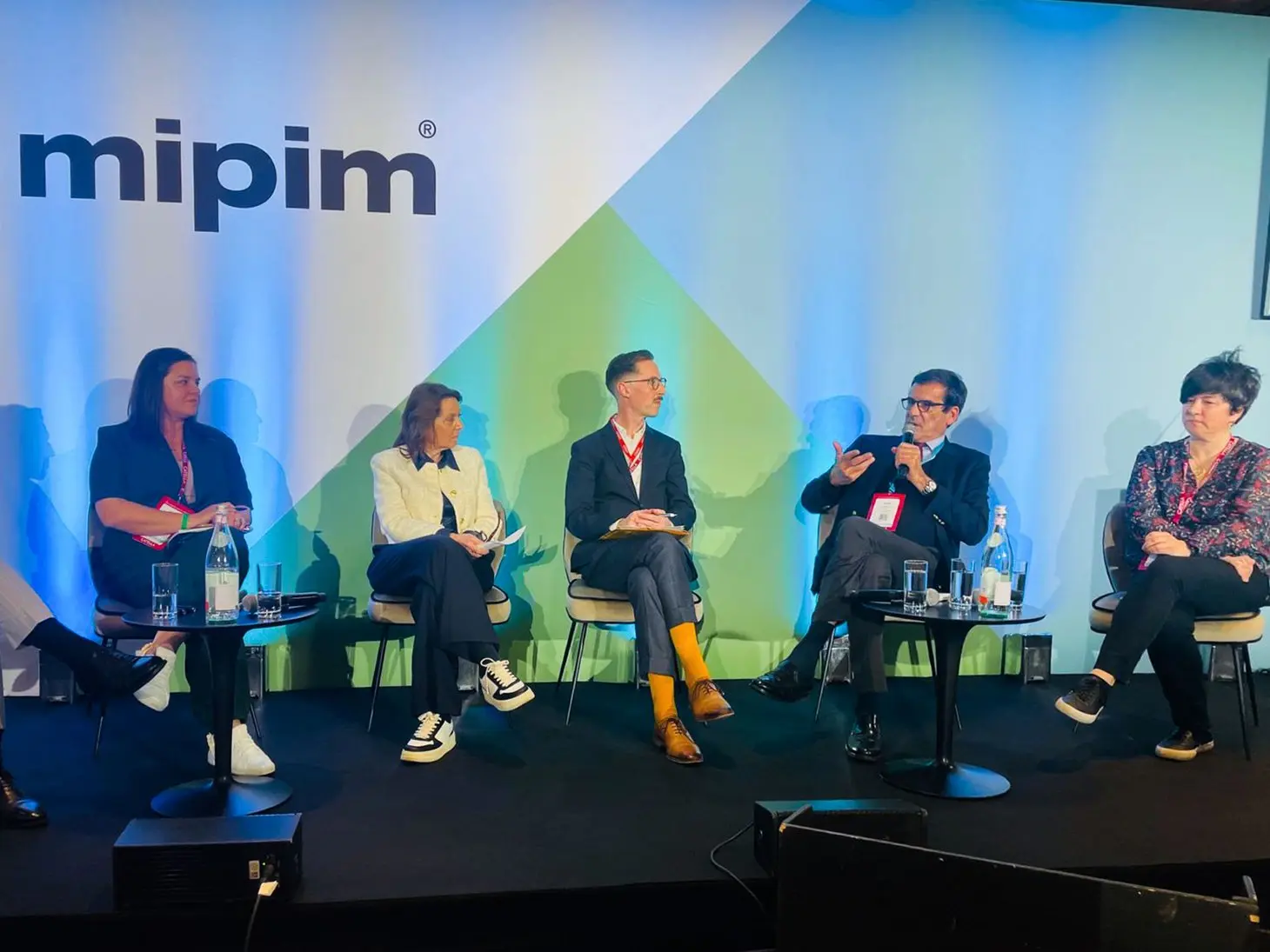
The municipal example and the involvement of society as a whole in developing policies and measures is the answer that the Mayor of Porto brought to the conference ‘Plan the transition to Zero Carbon: City decarbonisation roadmaps as a guide’. The initiative takes place within MIPIM, where the region is presented as an investment attraction hub.
‘We have no option but to continue taking measures for the sustainability of the planet,’ said Rui Moreira, admitting the ‘burden we have to carry’. In the Mayor’s words, ‘no matter what happens, we have to show citizens that they will be better off – as individuals and as a collective, if we do things correctly’.
This Tuesday, the Mayor participated in a session with representatives of the Dutch Green Building Council, Latvian company Ekodoma, venture capital company KOMPAS VC and the City of London Corporation.
Sharing his fear of the political change the world is facing regarding the view on climate change, Rui Moreira stressed the need to ‘keep motivating citizens to invest in decarbonisation’. ‘We have to remind them that if we were the first to carbonise, we have to be the first to decarbonise’, he states.
He believes that is done firstly by example, and then by demonstrating the real impact ‘in the long run on the planet, but also on their own lives’.
‘We really have to bring people into policy. If we just tell them we’re going to take care of the environment, it’s not enough’.
At MIPIM, the Mayor mentioned how the municipality ‘used the roofs of public housing to produce electricity and that had a direct impact on the bill’ for citizens, and internalised waste management in the city so that ‘we could measure’ that work, whilst changing water distribution to reduce losses in the network.
‘No matter the cost, we must have a clean city’, he stresses, defending the need to occasionally ‘break previous city management rules’, when these services were mostly privatised.
For Rui Moreira, it is essential for people to ‘feel that they are doing their bit’. Furthermore, he said that the Porto Climate Pact was created aiming to ‘bring people together, to turn their own interests into a common one’.
‘We really have to bring people into policy. If we just tell them we’re going to take care of the environment, it’s not enough’, he states, noting ‘what we did was show them what we were going to do ourselves’, particularly in the rehabilitation of municipal neighbourhoods dealing with energy poverty or in the intervention at schools to make them more suitable.
‘Talking about climate change is very draining, telling people that they should feel guilty about what their predecessors did is a losing game’.
The measures in Porto also included issues such as free public transport or the availability of internet on buses, as well as investing in more green spaces and explaining why they are necessary.
‘It wasn’t just for dog walking, but because climate change is real’, says Rui Moreira, certain that ‘in recent years, people have realised that green areas that used to flood are now able to absorb water’ because retention basins have been created.
‘At first they were very surprised and even quite angry that those areas were full of water. We then explained that it was a way to avoid street flooding and people began to accept and even apply it to their private spaces’, the Mayor says.
In the Mayor’s words, ‘if we just tell people that we need a better planet, we can get some involved, but not all of them. Talking about climate change is very draining, telling people that they should feel guilty about what their predecessors did is a losing game. On the contrary, ‘when we show them the benefits, the city feels engaged’. ‘We have to make people feel proud of their city’, he concluded.