14/11/2025
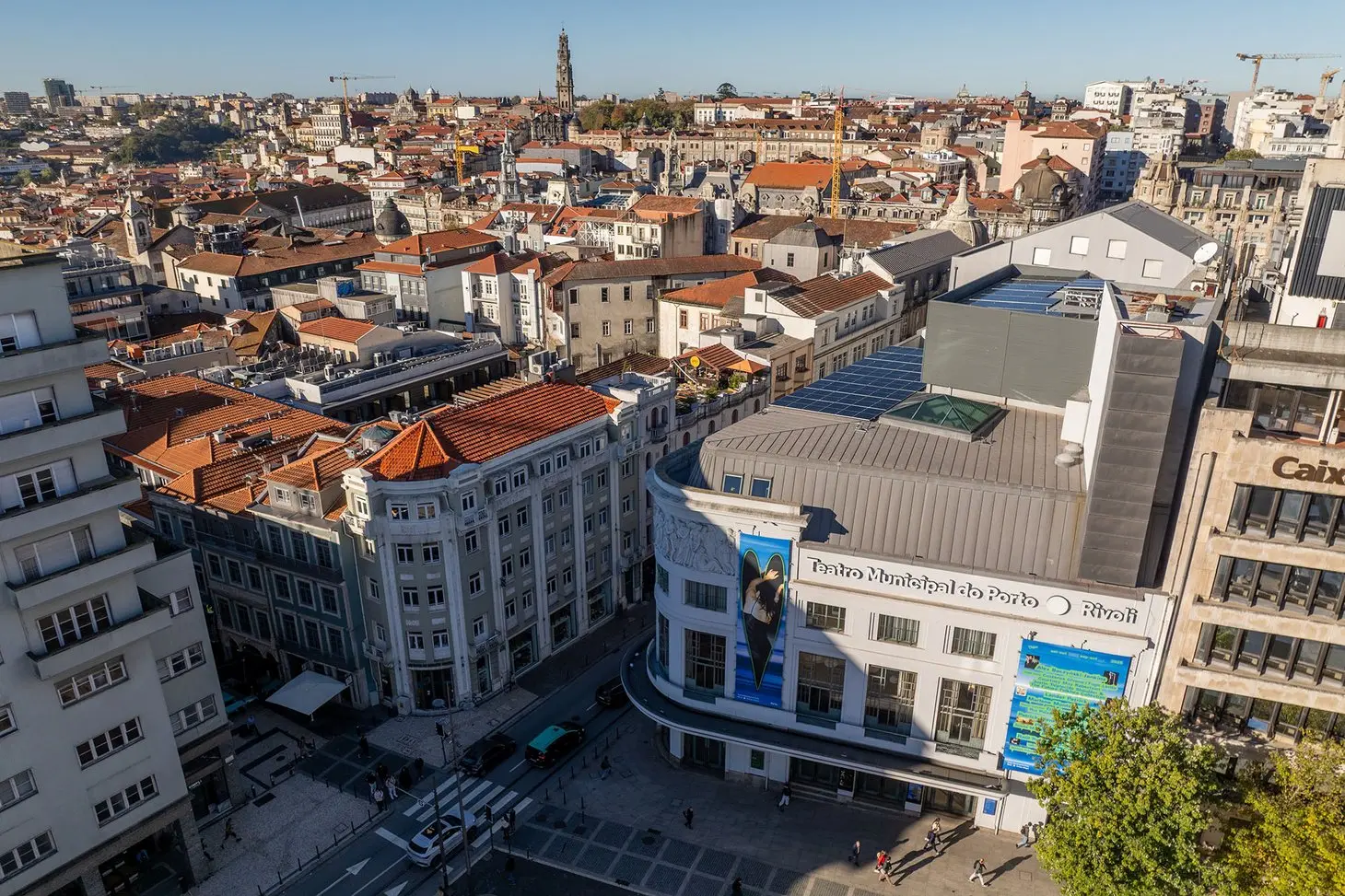
The municipality has started operating a new self-consumption production unit (UPAC) at Teatro Rivoli, a unit of the Municipal Theatre of Porto, reinforcing its energy transition strategy for public buildings. The installation, made up of 139 photovoltaic solar panels and with an installed capacity of 86.2 kWp, began operating in September and should reduce the building’s electricity consumption by around 30%.
The unit’s estimated annual production is 121.81 MWh, helping to increase self-sufficiency and reduce the energy bill associated with one of the city’s most emblematic cultural spaces.
According to data from Águas e Energia do Porto, in August this year the city already surpassed the total renewable energy production recorded for 2024, with more than 2 GWh. This result underlines the municipality’s commitment to decentralised and sustainable production, to reduce dependence on the electricity grid, operating costs and emissions associated with municipal activity.
Municipal Theatre of Porto joins energy transition
Local energy production is a fundamental pillar of the municipality’s carbon neutrality strategy, which is why the municipal company intends to continue installing UPACs in other public buildings.
The investment in Teatro Rivoli is part of a broader strategy to modernise and decarbonise the municipal buildings stock, in line with the Porto 2030 Municipal Climate Action Plan. In addition to the environmental benefit, installing these units has proved to be financially effective, helping to mitigate the municipality’s exposure to volatile energy prices.
Porto’s urban sustainability strategy has made progress in several areas – from electric mobility to energy rehabilitation – and the cultural sector is now taking an active role in this agenda. With this new photovoltaic installation, the Municipal Theatre of Porto is joining energy transition, becoming an example of innovation and sustainability.
The municipality plans to replicate this approach in other strategic facilities, reinforcing its commitment to a more efficient, resilient and environmentally responsible city.